Your Copay Isn't Always the Best Deal: When Cash, Discounts, or Canada Beat Your Insurance

Photo: person comparing prescription prices on calculator at pharmacy counter, via img.freepik.com
There is a quiet assumption baked into most pharmacy transactions: if you have insurance, you use it. Hand over your card, pay the copay, done. It feels like the responsible choice.
It is sometimes the more expensive one.
This is not a fringe anomaly. Pharmacists see it weekly — patients paying $40 copays for medications that would cost $12 in cash, or $18 through a discount card, or a fraction of that through a licensed Canadian pharmacy. Insurance pricing is a negotiated system, not a guarantee of the lowest price, and for cost-conscious patients it deserves the same scrutiny as any other purchase.
Why the Copay Can Lose
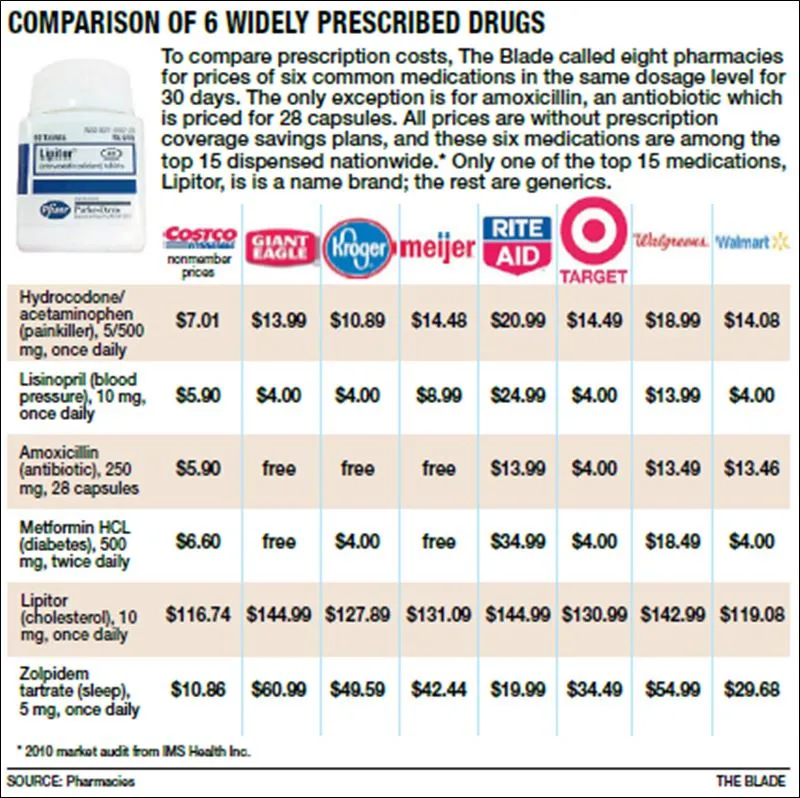
Insurance copays are set by formulary tiers negotiated between insurers and pharmacy benefit managers. These figures can be anchored to prices that were reasonable years ago, or to list prices rather than what the drug actually costs today. Meanwhile, cash prices have fallen — driven by generic competition, pharmacy discount programs, and transparent pricing tools — sometimes undercutting the copay entirely.
There's a second, less obvious cost: paying through insurance draws down your deductible and feeds claims data into a system that can nudge your future premiums. Paying a low cash price keeps the transaction entirely outside that machinery.
How to Run the Comparison
The process takes ten minutes and should happen once a year, or whenever a prescription changes:
- Get the insurance price. Ask your pharmacy to run the claim and quote the copay before filling.
- Get the cash price. Ask what the medication costs without insurance, including any in-store discount program.
- Check a discount card or pricing tool. These free programs negotiate their own rates and often beat both of the above.
- Check the Canadian price. For eligible maintenance medications, licensed Canadian pharmacies can quote a delivered price — frequently the lowest of all, especially for brand-name drugs that are dramatically cheaper under Canadian pricing rules.
- Compare total annual cost, not per-fill cost, since dispensing fees and shipping cadence matter for anything you take daily.
Five Categories Where the Math Surprises People
1. Generic maintenance medications. Blood pressure pills, statins, SSRIs. Many of these cost less in cash than a typical tier-one copay. Some pharmacies sell 90-day supplies of common generics for a few dollars on internal discount lists.
2. Insulin and diabetes supplies. A fraught category in the United States, where list prices historically soared. Canadian pricing for identical insulin products is frequently a fraction of American cash prices, which is why cross-border options became a lifeline for many patients.
3. Brand-name drugs with no generic. When no generic exists, the U.S. price reflects unregulated market dynamics, while the Canadian price reflects negotiated ones. The gap can be enormous — often the single biggest saving available through cross-border purchasing.
4. Inhalers and EpiPens. High-list-price products with loyal patient bases. Copays may mask the underlying cost, and uninsured or high-deductible patients often do dramatically better sourcing these from Canada.
5. Short-term courses — sometimes. The counterintuitive exception: for a brief antibiotic course, a cheap generic cash price may be less hassle than involving insurance at all, especially if you haven't met your deductible and the claim won't count toward anything meaningful this year.
A Note on Honesty in the Comparison
Advocates of cash and cross-border purchasing — and we count ourselves among them — should be clear about the limits. Insurance genuinely wins for expensive specialty drugs with capped copays, for hospitalization and catastrophic coverage, and for patients whose plans negotiate prices below cash rates. Discount cards are free but change your effective price invisibly, so always confirm the final total before paying. And any cross-border purchase should go through a pharmacy that requires a valid prescription and is licensed in its province.
The Habit Worth Building
The counterintuitive truth at the centre of this article is simple: your copay is a data point, not a verdict. Treat it as one quote among several. Run the four-step comparison on your most expensive maintenance prescription this month. If your insurance wins, you've lost ten minutes. If it doesn't — and for a meaningful share of patients, it won't — you've found money that was sitting on the counter all along.