The Generic Question: Where the Savings Are Real — and Where They Aren't

Photo: DFID - UK Department for International Development, CC BY 2.0, via Wikimedia Commons
Walk into any pharmacy in Toronto, Vancouver, or Halifax and ask about generics, and you'll likely hear the same refrain: they're cheaper and they work just as well. Both statements are generally true. But for patients managing long-term prescriptions — particularly those already looking north of the border for relief from American drug prices — the details matter. How much are you actually saving? And are there situations where the generic isn't the obvious answer?
Why Generics Cost So Much Less
A generic medication contains the same active ingredient as its brand-name counterpart, in the same dosage and strength, and must meet the same bioequivalence standards set by Health Canada. What it doesn't carry is the original manufacturer's research-and-development investment, patent protection, or marketing budget.
Once a patent expires, multiple manufacturers can produce the drug, and competition drives prices down — often by 80 to 90 percent relative to the brand. In Canada, this effect is amplified by provincial formularies and pan-Canadian pricing negotiations that hold generic prices to some of the lowest levels among developed nations.
Where the Numbers Tell the Story
Consider a few illustrative comparisons (prices vary by province, pharmacy, and coverage):
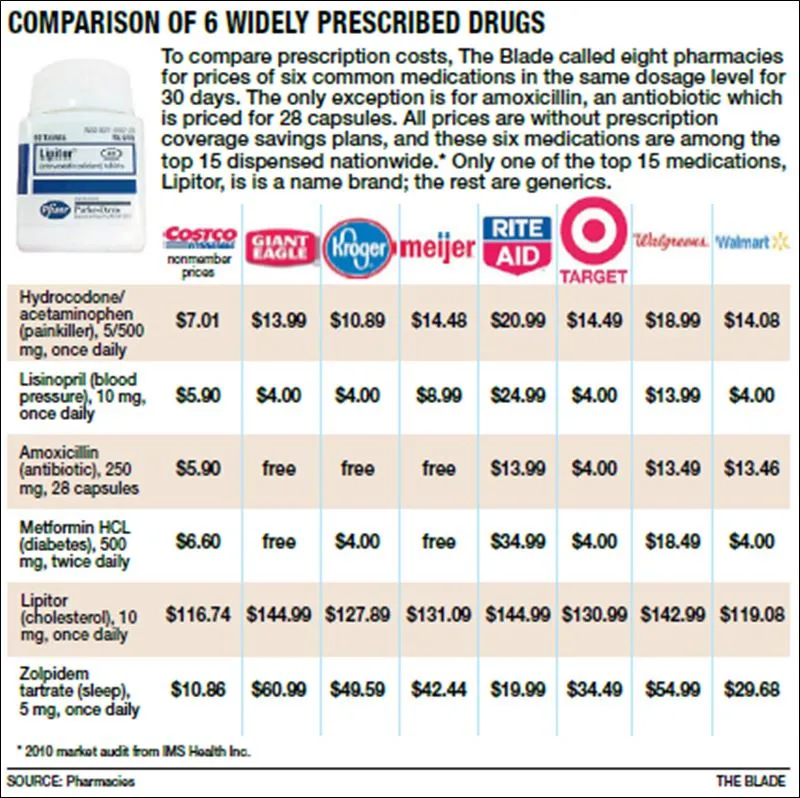
- Atorvastatin (Lipitor): Brand-name Lipitor can run several times the cost of generic atorvastatin, which is available for pennies per tablet in Canada.
- Sertraline (Zoloft): Generic sertraline typically costs a small fraction of the brand price, with no meaningful difference in therapeutic outcome for most patients.
- Metformin: One of the world's cheapest generics; the brand version (Glucophage) offers essentially no advantage.
In each of these cases, the generic delivers near-identical clinical value at a dramatically lower price. For the majority of prescriptions dispensed in Canada — generics now account for roughly three-quarters of all prescriptions — the switch is a financial no-brainer.
When the Gap Narrows — or Disappears
The picture is less tidy in certain categories:
Narrow therapeutic index drugs. Medications such as warfarin, levothyroxine, and certain anticonvulsants require precise blood levels. While generics are still approved as bioequivalent, some clinicians prefer patients stay on a single manufacturer to avoid subtle variations. Switching between generic manufacturers — not just brand to generic — can warrant monitoring.
Recently patented drugs. For newer biologics and specialty medications, generics (or their close cousins, biosimilars) may not yet exist, or may offer only modest discounts early in their lifecycle.
Combination formulations. A brand-name drug that combines two ingredients into one tablet may cost more than taking two generics separately — or less, once dispensing fees and adherence convenience are factored in. The math isn't always intuitive.
Insurance quirks. Some American plans, particularly those used by cross-border shoppers, apply the same copay to brand and generic tiers, erasing the incentive to switch at the counter.
A Simple Decision Framework
Before you agree to any prescription, run it through these four questions:
- Is a Health Canada–approved generic available? If yes, proceed to question two.
- Is the drug on a narrow therapeutic index list, or has your prescriber flagged stability concerns? If yes, discuss whether staying on one consistent product makes sense.
- What is the actual out-of-pocket difference? Ask the pharmacy to quote both. A $5 difference on a one-time prescription is noise; a $60 monthly difference is not.
- Does your coverage treat them differently? If your plan charges the same copay either way, the decision becomes about consistency rather than cost.
The Cross-Border Dimension
For Americans buying from Canadian pharmacies, generics add another layer of savings on top of an already favourable exchange. Canadian generic prices are frequently lower than American generic prices for the same molecule — a quirk of Canada's regulated pricing environment. That means a patient who switches from brand to generic and fills it through a licensed Canadian pharmacy may capture savings from both moves at once.
The same cautions apply, of course: verify the pharmacy's licensing, require a valid prescription, and consult your prescriber before making any change to your medication regimen.
The Bottom Line
For most common, older medications, the generic option is overwhelmingly the better financial choice, and the clinical equivalence is well established. The exceptions — narrow therapeutic index drugs, newer therapies, and odd insurance dynamics — are real but represent a minority of prescriptions. The patients who overpay are rarely the ones who asked the wrong question; they're the ones who never asked at all. Bring the four questions above to your next pharmacy visit, and let the price tag make the argument for you.