Ten Prescriptions Where the Canadian Price Tag Tells a Very Different Story
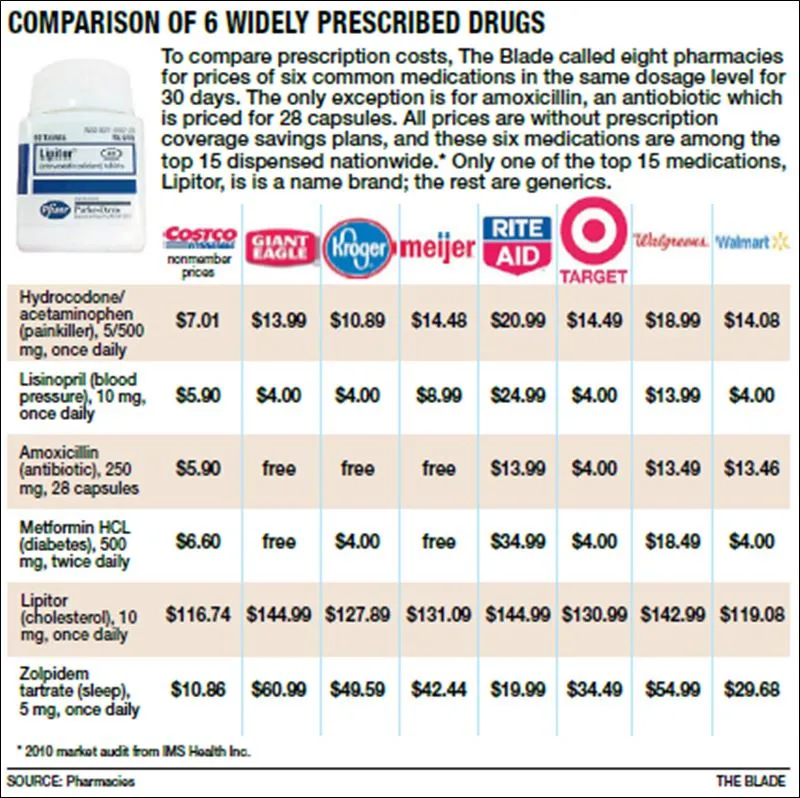
Photo: comparison of prescription drug prices calculator and medication packages on table, via www.toledoblade.com
The pharmaceutical price gap between the United States and Canada is not a rumour — it is arithmetic, documented repeatedly by the RAND Corporation, which has found U.S. brand-name drug prices average roughly three to four times Canadian levels. For patients paying out of pocket, the difference can determine whether a prescription gets filled at all.
Below, we examine ten commonly prescribed medications where the transborder price differential is most striking, followed by practical advice on making a switch safely. Note that prices fluctuate, generic availability varies, and figures here are illustrative estimates for cash-paying patients rather than quotes.
The Price Gap, Medication by Medication
1. Insulin (long-acting analogues such as Lantus). Before recent U.S. price caps and biosimilar competition, vials that cost roughly $300 in the U.S. sold for under $100 in Canada. Even post-reform, Canadian prices and biosimilars like Basaglar remain markedly cheaper for uninsured Americans.
2. EpiPens (epinephrine auto-injectors). A two-pack that famously surged past $600 in the U.S. has historically been available in Canada for the equivalent of roughly $100–$150. Canadian alternatives, such as the Allerject auto-injector, widen the gap further.
3. Humira (adalimumab). The world's best-selling drug for years carries an annual U.S. list price that can exceed $80,000; Canadian pricing, and now biosimilars, run a fraction of that. Speciality drugs like this usually require careful physician coordination before any cross-border purchase.
4. Januvia (sitagliptin). A common diabetes medication whose U.S. cash price often exceeds $600 monthly, compared with roughly $150–$200 from Canadian pharmacies.
5. Xarelto (rivaroxaban). This anticoagulant's U.S. retail price frequently tops $550 per month; Canadian equivalents often land near $150.
6. Crestor (rosuvastatin). Even for statins — a category with inexpensive generics — brand-name pricing diverges sharply, with U.S. cash prices around $400 monthly versus well under $100 in Canada. Generic rosuvastatin is inexpensive in both countries and worth asking about first.
7. Advair Diskus (fluticasone/salmeterol). A mainstay asthma inhaler costing $400 or more in the U.S. has long retailed near $100 in Canada, where generics of the combination are also available.
8. Lyrica (pregabalin). U.S. brand pricing can exceed $450 monthly; Canadian prices typically run under $100, and generic pregabalin is cheap in both countries.
9. Harvoni (ledipasvir/sofosbuvir). Hepatitis C treatment exemplifies the most extreme disparities — U.S. courses have exceeded $90,000, while Canadian and international pricing is dramatically lower.
10. Combivent Respimat (ipratropium/albuterol). This COPD inhaler retails for roughly $400 in the U.S. against prices under $100 in Canada.
Why the Gap Exists
Canada's Patented Medicine Prices Review Board regulates the maximum price manufacturers may charge, and provincial drug plans negotiate collectively. The United States, by contrast, leaves pricing largely to market negotiation between manufacturers and insurers — a system that produces the highest brand-drug prices in the developed world.
Talking to Your Doctor About a Cross-Border Option
Switching the source of your medication is a medical decision, not merely a shopping one. Physicians respond best to prepared, specific conversations:
- Bring the numbers. Show your out-of-pocket costs and the Canadian price you have verified. Doctors switch medications for cost reasons regularly.
- Ask about Canadian equivalents. Many drugs are marketed under different brand names in Canada, and Health Canada-approved generics follow different naming conventions (prefixes like Apo-, Teva-, or ratio-).
- Discuss therapeutic substitutes. Sometimes the better answer is not a Canadian source but a cheaper U.S. generic, a 90-day retail discount program, or a manufacturer savings card.
- Flag stability concerns. Insulins, injectables, and refrigerated medications may not tolerate mail transit; your doctor can suggest alternatives.
- Update your medication record. Ensure your physician and pharmacist know every product you take, regardless of origin, to prevent interactions and duplication.
Safety First, Savings Second
Verify any pharmacy through the Canadian International Pharmacy Association or PharmacyChecker, confirm provincial licensing, and never buy prescription drugs without a valid prescription. Counterfeit products disproportionately circulate through websites that ignore these basics.
The takeaway for cost-conscious patients: the Canadian price gap is real and, for some medications, enormous. But the smartest path usually begins with a conversation in your own doctor's office — because the cheapest safe option, whether domestic or cross-border, is the one chosen with full information.