When Your Lifeline Lives Across the Border: The Legal Reality of Importing Insulin, Inhalers, and Emergency Medication
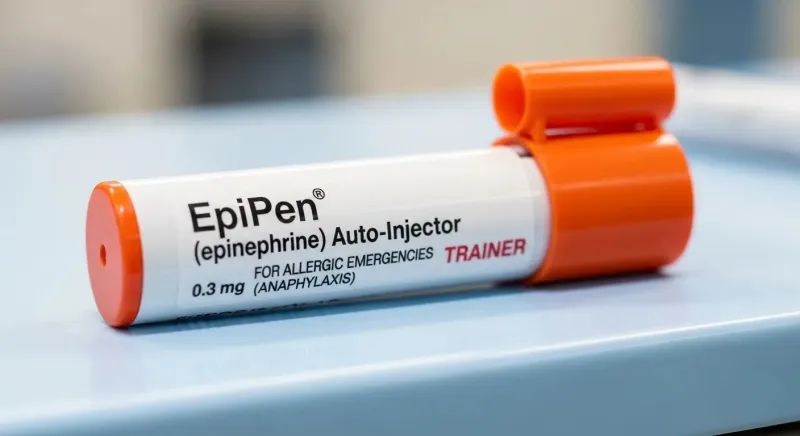
Photo: insulin vial inhaler and epinephrine auto-injector on table with prescription papers, via ik.imagekit.io
The rules governing personal medication importation from Canada into the United States are, to put it charitably, unsettled. Federal law generally prohibits importing prescription drugs purchased outside the country. Yet federal guidance also states that enforcement discretion may apply when a personal importation poses no unreasonable risk — a carve-out historically used for medications unavailable domestically. For the millions of Americans rationing insulin or stretching an inhaler, this ambiguity is not a technicality. It shapes real decisions, made under real financial pressure.
This article takes a position: the gray zone exists because policy has failed to keep pace with drug pricing, and patients navigating it deserve clear-eyed guidance rather than either false reassurance or alarmism. Let's map the terrain through three patients.
Case One: The Insulin-Dependent Patient Facing a Four-Digit Price
Consider an adult with type 1 diabetes whose insulin costs, even with insurance, consume a significant share of monthly income. Insulin occupies a unique position in the importation debate. It is temperature-sensitive, requires reliable cold-chain shipping, and a supply interruption is life-threatening. Buying it from an unverified online seller is genuinely dangerous — counterfeit insulin circulates, and there is no safe way to verify product authenticity from a website alone.
The safer path, in most cases, is domestic. Since 2023, major insulin manufacturers have capped out-of-pocket costs at $35 per month through patient savings programs, and several states have enacted their own insulin copay caps. For this patient, the legal risk and cold-chain risk of importation outweigh the savings that remain. The backup plan is a documented 30-day reserve supply, enrolment in a manufacturer savings program, and a conversation with a certified diabetes educator about cost-assistance resources — not a package crossing the border in summer heat.
Case Two: The Asthma Patient and the Rescue Inhaler
A patient with moderate persistent asthma faces a different calculus. Maintenance inhalers remain stubbornly expensive in the U.S. market, with some brand-name products priced in the hundreds of dollars per inhaler. Unlike insulin, inhalers are less fragile in transit and a short supply gap is serious but rarely immediately fatal.
Here the importation question is more genuinely contested. Purchasing from a pharmacy licensed in Canada — one requiring a valid prescription and staffed by Canadian-licensed pharmacists — carries materially lower risk than buying from an open marketplace. Still, the Food and Drug Administration's formal position is that personal importation of prescription drugs is generally not permitted, and the enforcement-discretion guidance applies narrowly to drugs unavailable in the United States. An inhaler that exists domestically, merely at a higher price, does not clearly fit that carve-out. Our view: this is a personal risk decision that patients are making in good faith, but it should be made with eyes open. A legal backup plan includes asking about generic alternatives, checking manufacturer copay cards, and confirming insurance formulary coverage before an order is placed.
Case Three: The Parent and the Epinephrine Auto-Injector
A parent of a child with severe food allergies confronts the most time-sensitive scenario of the three. Epinephrine auto-injectors expire quickly, are carried everywhere, and are needed in seconds, not days. Mail-order importation — with customs delays and uncertain timelines — is poorly suited to this need. A two-week wait for a shipment is irrelevant when anaphylaxis is measured in minutes.
The pragmatic route for this family is domestic: generic epinephrine products have entered the U.S. market at meaningfully lower prices, pharmacy discount programs frequently undercut list prices, and school access laws in most states permit stock inhalers and epinephrine on premises. The backup plan here is redundancy purchased domestically — one auto-injector at home, one at school, one in the car — rather than a cheaper but slower supply from abroad.
Where the Law Actually Stands
Summarising the legal landscape plainly: importing prescription drugs for personal use is generally against federal law; the FDA has historically exercised discretion in narrow circumstances; and recent state-level importation programs operate through government channels, not individual patients. No state authorises an individual resident to personally import medication. Any advice suggesting otherwise should be treated with skepticism.
What legitimate cross-border resources offer is not law-breaking but information: price transparency, verified pharmacy directories, and guidance on domestic assistance programs that achieve similar savings without legal exposure.
A Common Thread Across All Three Cases
Each patient's safest strategy shared a structure: a verified domestic savings mechanism, a documented emergency reserve, and — only where the risk profile justified it — careful consideration of licensed cross-border options. Lifeline medications are precisely the wrong category for improvisation. The urgency that makes them expensive makes their supply chain unforgiving. Plan for the emergency you hope never comes, and do it through channels you can verify.