Read the Fine Print Before You Enroll: What Pharmacy Memberships and Delivery Plans Really Cost You
Photo: pharmacy counter loyalty card signup customer, via lh7-us.googleusercontent.com
Walk into any large pharmacy chain in Canada — Shoppers Drug Mart, Rexall, London Drugs — and you will likely be asked to join something. A loyalty card. A delivery subscription. An auto-refill program promising a percentage off every fill. These offers are rarely presented as costs; they are presented as perks. Yet for patients managing chronic prescriptions, the difference between a genuinely money-saving program and an expensive habit of convenience can amount to hundreds of dollars a year.
The Anatomy of a 'Free' Program
Most pharmacy programs monetize members in one of three ways. First, through direct fees — annual or monthly charges for delivery, premium tiers, or 'savings clubs.' Second, through data: loyalty programs trade discounts for purchasing profiles that shape marketing and, increasingly, pricing strategy. Third, and least visibly, through behavioural lock-in. Once your prescriptions are set to auto-refill at one chain, the friction of moving them elsewhere — including to lower-priced competitors or cross-border options — rises sharply.
None of this is inherently predatory. But it means the sticker price of a membership is almost never the full price.
Running the Real Math
Consider a common scenario. A patient pays $10 per month for unlimited prescription delivery. On its face, that is $120 a year for a genuine convenience, particularly valuable in rural parts of the Prairies or for patients with mobility limits. But delivery programs are frequently bundled with a requirement that prescriptions be filled at full retail rather than discounted cash prices. If the member's medication retails $8 higher per fill than the best cash or cross-border price, the subscription has effectively erased its own value — and then some.
The same logic applies to points programs. Earning 'x points per dollar' sounds generous until you calculate the redemption rate. Many loyalty programs return roughly 0.5 to 3 percent of spending, and only on eligible purchases. If a points program steers you away from a cheaper generic equivalent or a 90-day fill option, the rewards can cost far more than they deliver.
Auto-refill discounts deserve particular scrutiny. Chains sometimes attach a modest percentage discount to enrolment — but auto-refill also suppresses comparison shopping. A patient who renews automatically for eleven months without checking prices has surrendered the single most powerful savings tool available: asking whether the price changed.
The Lock-In Problem
The most expensive feature of any pharmacy program is the one never printed on the sign-up form: inertia. Transferring prescriptions between pharmacies takes a phone call, yet surveys consistently show most patients on chronic medications have never compared prices between pharmacies in their own city — let alone between a Canadian dispenser and a licensed international option.
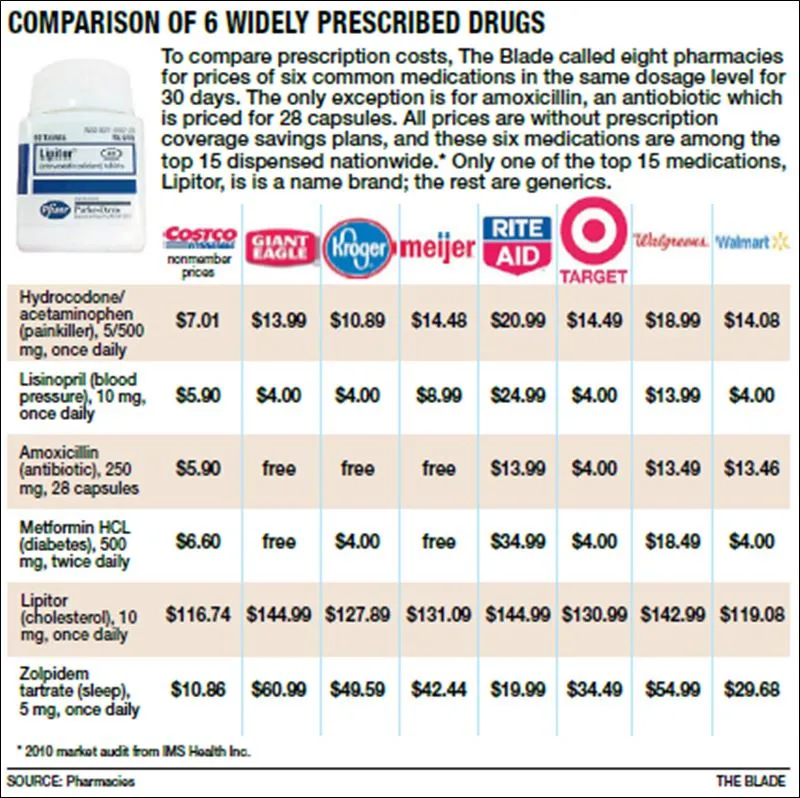
For cost-conscious patients, that inertia has a measurable price. Insulin analogues, statins, asthma inhalers, and many brand-name drugs can carry substantially different prices depending on where and how they are purchased. A membership that makes one pharmacy the path of least resistance quietly taxes every month you stay without checking.
A Pre-Enrolment Checklist
Before joining any pharmacy program, take five minutes with this list:
- Total annual cost. Multiply monthly fees by twelve, and add any minimum-spend requirements to earn 'free' status.
- Exclusions. Does the discount apply to narcotics, specialty drugs, or vaccines? Many programs exclude the most expensive categories.
- Interaction with insurance. Some programs cannot be combined with private drug plans, meaning the discount may be illusory for anyone with coverage.
- Redemption value. Convert points to dollars. If 10,000 points equals $10, that is one percent — modest by any standard.
- Exit friction. Can you cancel delivery or auto-refill online, or must you phone during business hours? Difficulty leaving is a design choice.
- The comparison test. Before enrolling, price your prescription at two other pharmacies and at a reputable cross-border option. If the membership does not beat those numbers, it is a convenience purchase, not a savings strategy.
Convenience Is Legitimate — Priced Honestly
To be clear: delivery and refill programs deliver real value for many patients, particularly seniors and those in remote communities from Newfoundland to northern British Columbia. The argument here is not against convenience but against unexamined convenience. A program you chose after comparing prices is a tool. A program you joined at the till is a habit.
The Canadian Pharmacy Fit position is simple: every enrolment decision deserves the same scrutiny you would give a medication itself — dosage, cost, side effects, and alternatives included. Fine print is not an obstacle. It is information, and information is where savings begin.