Cold Chain, Warm Climate: Why Some Prescriptions Should Never See a Mailbox
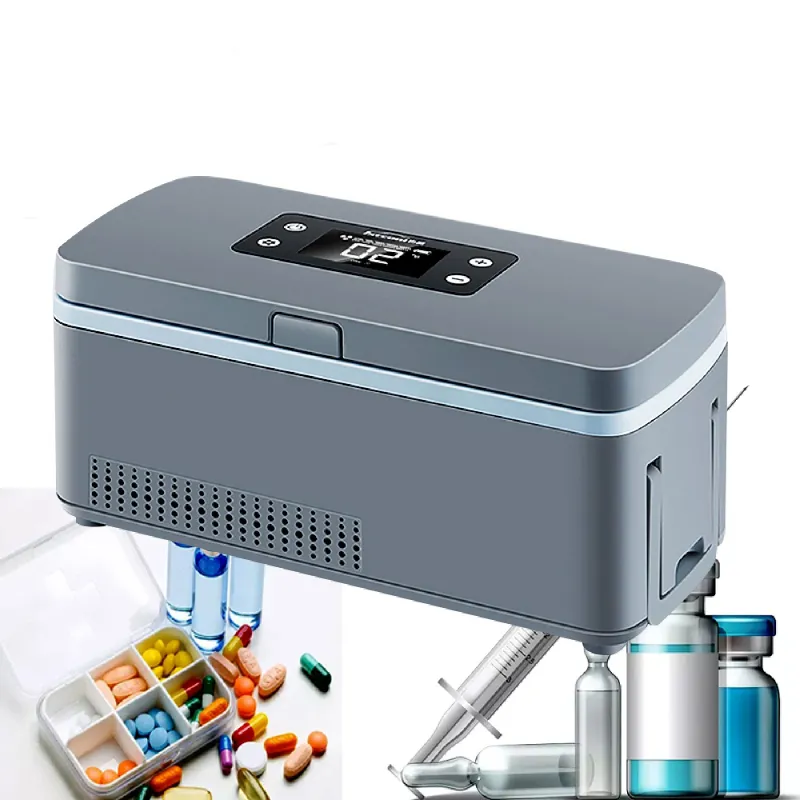
Photo: medication vials and insulin pen inside refrigerator with thermometer, via m.media-amazon.com
The Price Tag Hides a Temperature Requirement
Anyone who has compared American and Canadian drug prices knows the sticker shock can be dramatic. A month of a brand-name injectable can cost hundreds of dollars less across the border, and for patients paying cash, the temptation is understandable. But there is a line item no receipt shows: the cold chain — the unbroken series of temperature-controlled steps that carries certain medications from the manufacturing floor to your refrigerator door.
When that chain breaks, the drug doesn't spoil in any way you can see. There's no smell, no discolouration, no warning label. The medication simply may not work as well as it should. For a patient managing a chronic condition, that silent failure can be more expensive than any discount saved.
Which Medications Live in the Danger Zone
Not every prescription is fragile. Tablets and capsules — statins, blood pressure medications, many antidepressants — are generally stable at room temperature and tolerate shipping reasonably well. The problem candidates share a common trait: they are large, complex molecules whose three-dimensional structure is essential to their function.
Biologic drugs top the list. These include insulin products, certain arthritis and autoimmune treatments, and many specialty injectables. Their protein structures can unfold when exposed to heat or repeated freeze-thaw cycles, rendering them less effective or inert.
GLP-1 receptor agonists — the injectables that have become household names for diabetes and weight management — typically require refrigeration before first use. Some tolerate room temperature for a limited window afterward, but that window is measured in days, not weeks.
Thyroid medications deserve a special mention because they surprise people. Levothyroxine is a small-molecule tablet, yet it is notoriously sensitive to heat and humidity, and some manufacturers recommend refrigeration to preserve potency. A drug that keeps your metabolism running is a poor candidate for a slow, warm journey.
Certain eye drops, some liquid antibiotics, and various vaccines round out the category of products that degrade outside controlled conditions.
Where the Chain Breaks
A licensed Canadian pharmacy with a robust distribution system can maintain cold chain as well as any American one. The vulnerability appears in the gaps — the stretches of the journey no one controls.
Customs inspection is the first wildcard. A parcel held for three days in a warm border facility may spend that time well above the permitted range, and no amount of ice pack inside the box can compensate once the refrigerant expires. Mail processing times vary unpredictably, and a shipment that clears in two days during one week may sit for ten the next.
The final leg matters too. A package left on a sun-baked porch in an Arizona summer, or in a cold snap on a Canadian doorstep in January, has already absorbed temperatures the label never authorized. And then there is the return trip problem: if something goes wrong and the product needs replacement, the replacement faces the same gauntlet.
A Practical Sorting Exercise
Here is a straightforward way to evaluate your own prescriptions before considering any international purchase:
- Read the storage instructions. If the label says "refrigerate" or specifies a temperature range, treat it as a red flag for mail-order across borders.
- Check the tolerated excursion window. Some products state how long they survive at room temperature. If that window is shorter than realistic shipping time plus customs delay, the math fails before it starts.
- Ask what happens on failure. A domestic pharmacy can often replace a compromised product quickly. An international transaction cannot.
- Weigh the consequence of reduced potency. For a thyroid medication, sub-potency means weeks of fatigue before anyone notices why. For insulin, it can mean a dangerous emergency.
Where the Savings Can Still Be Found
This is not an argument against cross-border purchasing — it is an argument for matching the medication to the method. Stable oral medications, particularly brand-name drugs with large price gaps and generics where the domestic discount is thin, can be legitimate candidates for Canadian ordering when done through licensed pharmacies with proper verification.
For temperature-sensitive prescriptions, the better strategy is usually domestic: manufacturer patient-assistance programs, copay cards where eligible, 90-day fills to reduce per-fill costs, or therapeutic alternatives your prescriber might approve. Slower, less glamorous savings — but savings that don't carry the risk of paying full price for a drug that arrives half as strong.
The Bottom Line
The fridge test is simple: if your medication needs a refrigerator at the pharmacy, it likely needs one in transit, and no discount is worth a dose you cannot trust. Save the border trip for the stable tablets. Keep the fragile ones close to home, where the cold chain ends at your own refrigerator door.