Half the Tablet, Half the Bill? The Honest Guide to Splitting Prescriptions Safely
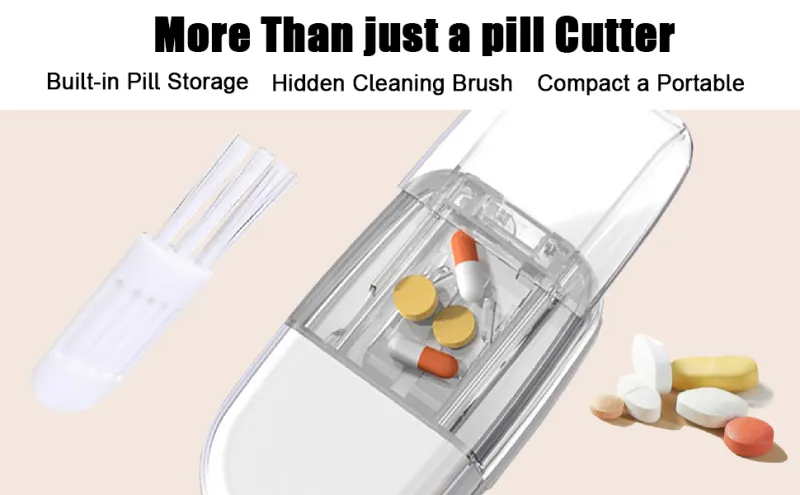
Photo: pill splitter cutting scored tablet on white counter, via m.media-amazon.com
At the pharmacy counter, one of the quietest money-saving conversations a patient can have is about tablet splitting. The arithmetic is simple: many medications are priced the same whether you take 10 mg or 20 mg, so a doctor prescribing 10 mg daily might write for 20 mg tablets to be halved — effectively giving you two months of therapy for the price of one. For patients paying out of pocket or staring down a private plan deductible, that is real money.
But splitting is not a universal trick. For some formulations, cutting a tablet doesn't just reduce the dose — it destroys the mechanism that makes the drug work safely. Understanding the difference is the whole game.
Why Splitting Works Financially
Pharmaceutical pricing rarely tracks dose linearly. A 20 mg tablet of a common statin or blood pressure medication often costs nearly identical to its 10 mg counterpart, because manufacturing, packaging, and dispensing drive the price more than active ingredient. This pricing quirk is why pharmacists and physicians occasionally suggest a "split-fill" arrangement: prescribe double the strength, halve the tablet, stretch the supply.
For a Canadian paying cash for a maintenance medication — say, a senior whose income-tested coverage doesn't quite stretch to the full basket of prescriptions — this can trim hundreds of dollars a year from a single drug.
When Splitting Is Legitimate
Some tablets are manufactured with a score line precisely because they're intended to be divided. If a tablet has a deep, centred score and your pharmacist confirms it's immediate-release, splitting is generally acceptable. Common examples where splitting is often appropriate include:
- Certain statins such as atorvastatin, when the dose calls for it
- Some blood pressure medications, including lisinopril and certain beta-blockers
- Selected antidepressants in immediate-release form, such as some SSRI tablets
- Certain medications for overactive bladder or reflux, where immediate-release tablets are scored
The key word is "some." Even within a drug class, one product may be split-safe while another is not. Always confirm the specific tablet with your pharmacist — brand and generic versions can differ in formulation.
When Cutting a Tablet Is Dangerous
The danger zone is any tablet engineered to release medication slowly, protect the drug from stomach acid, or prevent handling of the raw ingredient. Cutting these bypasses the engineering:
- Extended-release, sustained-release, or controlled-release tablets (often marked XR, SR, CR, XL, or ER). Halving one can dump a full day's dose into your system at once — a genuine overdose risk with some cardiac and psychiatric medications.
- Enteric-coated tablets, designed to survive the stomach and dissolve in the intestine. Cutting exposes the drug to acid or irritates the stomach lining.
- Capsules, which typically cannot be divided accurately.
- Combination and very small tablets, where splitting produces wildly uneven halves.
- Sublingual, chewable, and dissolving formulations, which rely on their form to deliver the drug correctly.
- Hormonal and certain oncology medications, where even small dose variations matter clinically.
If the tablet has no score line, treat that as a warning rather than an oversight. Manufacturers score tablets for a reason, and the absence of a score usually means the tablet wasn't designed to be divided.
The Practical Questions to Ask
Bring three questions to your next pharmacy visit:
- "Is this specific tablet safe to split?" Not the drug name — the exact product in the bottle.
- "Would a higher strength split in half work for my dose?" This is a question for your prescriber, but your pharmacist can flag whether the pricing supports it.
- "How should I split it?" Fingers are imprecise. An inexpensive pill splitter from any Canadian drugstore produces far more even halves, which matters for dose accuracy.
A quick note on coverage: if you're splitting tablets to save money, tell your prescriber so the prescription itself reflects the arrangement. A prescription written for 20 mg tablets taken as half daily keeps your pharmacist in the loop and protects you from refill confusion at the counter.
A Word on Accuracy
Even split-safe tablets don't divide perfectly. Studies of split tablets have found meaningful weight variation between halves, particularly with small or oddly shaped pills. For most maintenance medications this is tolerable; for drugs with a narrow therapeutic window — where the difference between effective and toxic is small — it is not. Your pharmacist can tell you which category your medication falls into.
The Bottom Line
Tablet splitting sits in that familiar territory of Canadian healthcare economics: a strategy that is sometimes brilliant, sometimes harmless, and occasionally hazardous — depending entirely on the medication in question. Used correctly, it is one of the most reliable prescription savings tools available without changing your therapy. Used carelessly, it can undo the very treatment it's meant to make affordable.
The five minutes it takes to ask your pharmacist whether your tablets are split-safe is, per dollar saved, likely the best-value consultation in Canadian healthcare.