The Paper Trail That Pays You Back: Claiming Prescription Costs at Tax Time Without Losing the Receipts
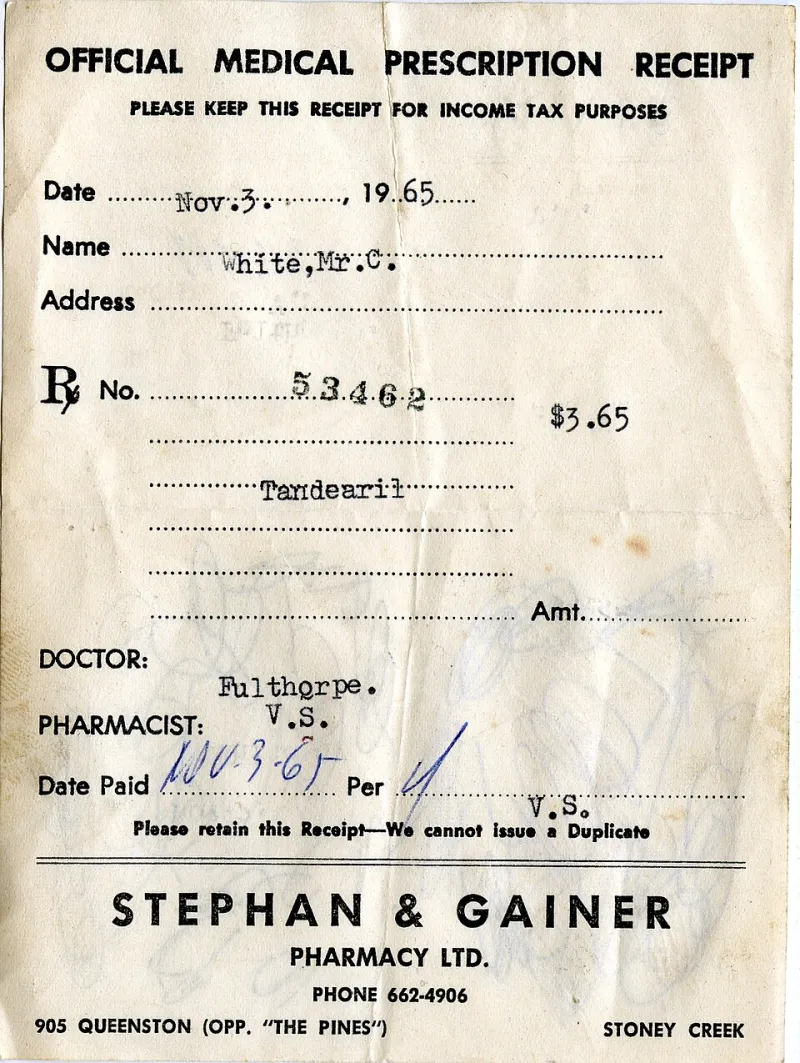
Photo: WayneRay, CC BY-SA 4.0, via Wikimedia Commons
For many Canadian households, the pharmacy receipt is the most casually discarded financial record of the year. It arrives at a stressful moment, gets folded into a wallet or shoved into a bag, and eventually lands in a shoebox, a drawer, or the recycling bin. Yet those slips can support a medical expense tax credit — and in a year when prescription costs have taken a larger bite out of the family budget, the difference between a tidy file and a scattered pile of paper can be meaningful.
The challenge is not simply keeping receipts. It is knowing which ones matter, how to organize them across a household, and how to handle the awkward cases that arise when medication is bought outside the usual provincial counter.
What Usually Qualifies — and What Does Not
The federal medical expense tax credit is built around eligible expenses, and prescription medications are among the most common. In general, drugs and medications prescribed by a medical practitioner and purchased from a pharmacy can be included. Dispensing fees charged by the pharmacy are typically part of the eligible amount as well, which is why an itemized receipt is more useful than a bare total.
Over-the-counter products are a frequent source of confusion. A bottle of vitamin D or a package of allergy tablets bought off the shelf is not automatically eligible simply because it relates to health. The key is the prescription and the pharmacy purchase. If a practitioner has prescribed a product and it is dispensed through a pharmacy, the paperwork may support a claim; if it was simply picked up from a shelf, it usually will not.
Insulin, prescription inhalers, and many chronic-disease medications fit comfortably into the prescription category. So do some medical supplies, though the rules are more specific. The practical lesson is to keep the detailed receipt and to avoid assuming that every health-related purchase belongs on the same line.
The Family Filing Question
A medical expense claim is often a household exercise rather than an individual one. In many two-parent families, one spouse claims eligible expenses for the other spouse and for dependent children. That can simplify the file, but it also creates a risk of double counting if both partners keep separate stacks and both claim the same receipts.
A single household ledger is usually easier to defend. It should show who paid, who received the medication, and whether any private insurance plan reimbursed part of the cost. Reimbursed amounts generally reduce the expense that can be claimed, so an insurance explanation of benefits is part of the paper trail, not an optional extra.
For adult children, parents, or other dependants, the rules become more technical. It is worth confirming the dependency test before adding those receipts to the family total. A brief conversation with a tax professional is often cheaper than correcting a claim later.
A Recordkeeping Routine That Survives December
The most reliable system is the least glamorous one: a monthly routine that takes ten minutes and prevents an April scramble. Keep a dedicated envelope or folder for the current tax year. Once a month, empty wallets and handbags, scan or photograph each receipt, and enter the key details into a simple spreadsheet.
Useful columns include the date, pharmacy name, patient name, prescription number, drug name, total paid, dispensing fee, amount reimbursed by insurance, and net cost. The prescription number matters because it links the receipt to the medication and makes it easier to replace a faded slip. A photograph is not a substitute for the original in every situation, but it is far better than nothing if the paper disappears.
Receipts should be kept for the period required by the Canada Revenue Agency, generally six years from the end of the tax year to which they relate. A shoebox can work for a single year; it does not work for a family with several chronic conditions and a mix of public and private coverage.
Where Cross-Border Purchases Complicate the File
Cross-border prescription purchases are where the paper trail often becomes thin. A receipt from a Canadian pharmacy usually carries the prescription number, the drug name, the dispensing pharmacy, and the amount paid. A foreign receipt may carry different information, a different currency, and a different format.
That does not automatically remove the expense from consideration, but it does raise the standard of documentation. Keep the foreign receipt, the prescription or a copy of it, the currency conversion record, and any customs or shipping documentation connected to the order. If the medication was prescribed by a Canadian practitioner and dispensed by a licensed foreign pharmacy, the file should tell that story clearly. Because cross-border claims can attract scrutiny, it is sensible to confirm the treatment of a particular purchase with a tax adviser before filing.
Common Mistakes Worth Avoiding
The first mistake is the missing dispensing fee. A receipt that shows only the drug total may understate the eligible amount. The second is claiming a product that was never prescribed. The third is losing the insurance record and claiming the full retail price after a plan has already paid part of it. The fourth is letting receipts fade in a hot car or a damp basement.
A fifth mistake is timing. Households often wait until tax season to discover that a receipt is illegible or that a pharmacy has changed ownership and cannot easily reproduce the record. A monthly scan prevents most of these problems.
Questions to Ask Before Filing
Before the file is closed, ask a few plain questions. Is this expense eligible in the year it was paid? Who in the household should claim it? Does the receipt show the prescription, the pharmacy, and the dispensing fee? Has insurance already reimbursed part of it? If the purchase was foreign, what conversion rate was used and is the supporting prescription on file?
The answers do not need to be complicated. They need to be consistent. A prescription receipt is not just a record of a purchase; it is a small piece of evidence. Kept well, it can turn a shoebox of paper into a legitimate claim — and a little less waste at tax time.